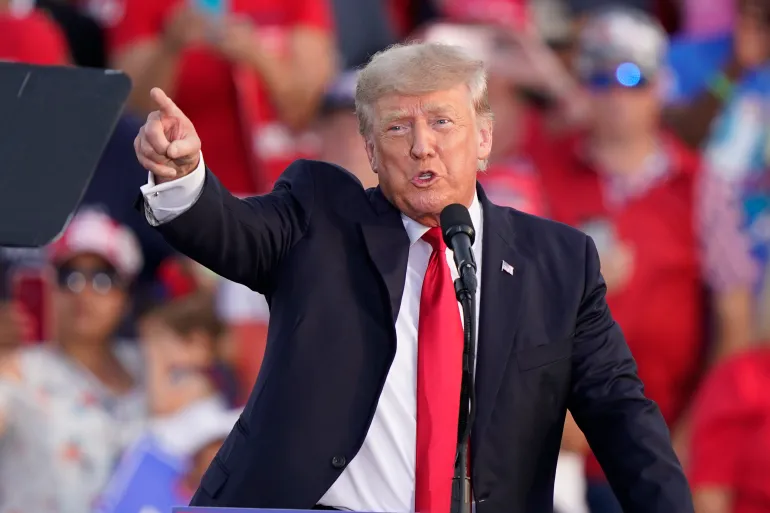
Tensions in the Middle East are rising again after former U.S. President Donald Trump warned international ships against paying any toll demanded by Iran for passing through the Strait of Hormuz. The statement has sparked global debate, intensified US‑Iran tensions, and raised fresh concerns about oil supply disruption and maritime security in one of the world’s most strategic waterways.
The Strait of Hormuz plays a critical role in global energy markets, and any threat to shipping routes in this region can directly impact global oil prices. Trump’s remarks have added a new dimension to an already fragile geopolitical situation.
What Did Trump Say About Iran’s Toll?
In his recent statement, Trump warned that ships should not comply with any demand from Iran to pay toll fees for passing through the Strait of Hormuz. He suggested that allowing such payments could empower Iran economically and politically at a time when tensions between Washington and Tehran remain high.
Trump emphasized the importance of maintaining open and secure international waters, framing the issue as one of global maritime freedom. According to his remarks, the United States would not support any move that strengthens Iran’s control over vital oil shipping lanes.
Although Iran has not officially confirmed imposing new toll measures, the rhetoric has intensified the diplomatic standoff. Analysts believe the comments are part of broader US foreign policy messaging aimed at countering Iran’s regional influence.
The warning quickly became breaking world news, drawing attention from global media outlets and policy experts who view the situation as a potential flashpoint in the Middle East crisis.
Why Is the Strait of Hormuz So Important?
The Strait of Hormuz is one of the most strategically important waterways in the world. Located between Iran and Oman, it connects the Persian Gulf to the Arabian Sea and serves as the main route for oil exports from major producers like Saudi Arabia, Iraq, the United Arab Emirates, Kuwait, and Qatar.
Nearly 20% of the world’s oil supply passes through this narrow channel daily. Because of this, even minor disruptions in the Strait of Hormuz can cause significant volatility in global oil markets. Energy traders, governments, and investors closely monitor developments in this region due to its direct connection to fuel prices and global economic stability.
Beyond oil transport, the strait is also crucial for global shipping routes and international trade. Any escalation in Middle East tensions can threaten maritime security and increase shipping insurance costs, affecting supply chains worldwide.
For decades, the Strait of Hormuz has been at the center of geopolitical conflicts, especially between the United States and Iran. Military presence in the region remains high, with U.S. naval forces frequently patrolling the waters to ensure freedom of navigation.
What Did Trump Say About Iran’s Toll?
In his recent statement, Trump warned that ships should not comply with any demand from Iran to pay toll fees for passing through the Strait of Hormuz. He suggested that allowing such payments could empower Iran economically and politically at a time when tensions between Washington and Tehran remain high.
Trump emphasized the importance of maintaining open and secure international waters, framing the issue as one of global maritime freedom. According to his remarks, the United States would not support any move that strengthens Iran’s control over vital oil shipping lanes.
Although Iran has not officially confirmed imposing new toll measures, the rhetoric has intensified the diplomatic standoff. Analysts believe the comments are part of broader US foreign policy messaging aimed at countering Iran’s regional influence.
The warning quickly became breaking world news, drawing attention from global media outlets and policy experts who view the situation as a potential flashpoint in the Middle East crisis.
Impact on Global Oil Prices
Any threat involving the Strait of Hormuz immediately affects global oil prices. Following Trump’s warning, energy markets reacted with caution, and oil futures showed signs of volatility. Investors fear that rising US‑Iran tensions could lead to shipping restrictions, military confrontations, or partial blockades.
Oil supply disruption remains one of the biggest concerns for global markets. If tankers face obstacles or increased security risks, transportation costs could rise significantly. This, in turn, may push up fuel prices worldwide, affecting consumers and businesses alike.
Energy analysts note that even political statements—without physical conflict—can create uncertainty in oil markets. Traders often respond quickly to geopolitical developments in the Middle East, causing price fluctuations.
Countries heavily dependent on oil imports are particularly sensitive to developments in the Strait of Hormuz. Asian and European economies closely monitor the region, as any instability could disrupt supply chains and slow economic growth.
US‑Iran Tensions Escalate
The latest controversy adds to a long history of strained relations between the United States and Iran. From economic sanctions to military incidents in the Persian Gulf, both countries have experienced repeated periods of confrontation.
Trump’s tough stance reflects broader concerns in Washington about Iran’s regional activities, including its influence in neighboring countries and its energy policies. Tehran, on the other hand, has consistently criticized U.S. sanctions and military presence near its borders.
Political experts warn that strong rhetoric from either side can escalate tensions quickly. In recent years, incidents involving oil tankers, drone strikes, and naval patrols have demonstrated how fragile the security situation can be.
While there has been no immediate military action following Trump’s comments, the diplomatic climate remains tense. Observers believe that maintaining open communication channels will be essential to avoid further escalation in the Gulf region.
International Reaction
The international community has responded cautiously to the situation. Global powers, including European nations and Asian oil importers, have expressed concern about stability in the Strait of Hormuz. Many governments emphasize the importance of maintaining free and secure shipping lanes under international law.
Energy-importing countries are particularly worried about the possibility of higher oil prices and supply disruptions. Some have called for diplomatic solutions to prevent further escalation between the U.S. and Iran.
Maritime security organizations have also highlighted the need for cooperation to protect commercial vessels operating in the region. Shipping companies are closely monitoring developments and reviewing contingency plans to ensure crew safety.
Financial markets remain sensitive to headlines related to the Middle East. Analysts believe that sustained tensions could lead to prolonged uncertainty in global energy markets.
Conclusion
The Strait of Hormuz remains a critical chokepoint for global oil supply and international trade. Trump’s warning to ships regarding Iran’s alleged toll demands has added new pressure to already fragile US‑Iran relations. While no immediate disruption has occurred, the situation underscores how geopolitical tensions in the Middle East can quickly influence global oil prices, maritime security, and economic stability.
As the world watches closely, diplomatic efforts and measured responses will play a key role in preventing further escalation. For now, the Strait of Hormuz continues to stand at the center of global energy security and international political debate.