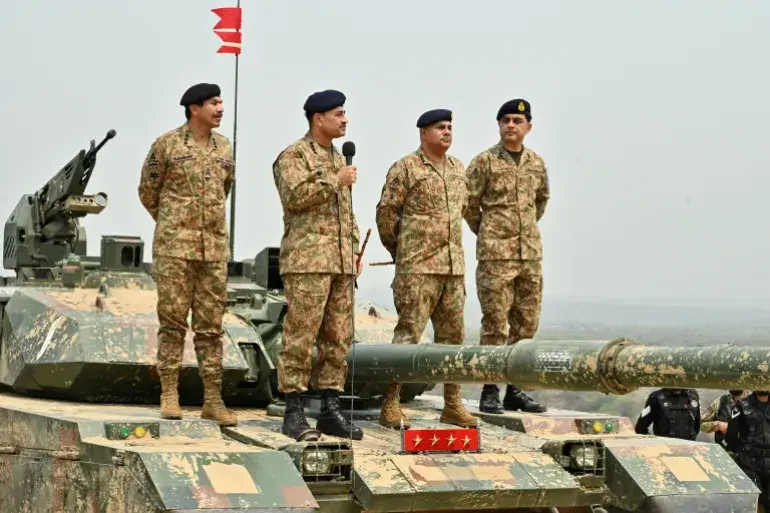
Regional conflicts have often reshaped political and military leadership across South Asia. In Pakistan’s case, two major confrontations—one involving India and another linked to rising tensions with Iran—have significantly influenced the trajectory of its army chief, Asim Munir. From battlefield command to diplomatic engagement, Munir’s leadership has evolved in response to rapidly shifting security challenges.
The war against India a year ago proved to be a defining moment. It not only intensified regional tensions but also elevated Munir’s standing within Pakistan’s military establishment, ultimately leading to his promotion to the rare rank of field marshal. Now, as tensions with Iran test Islamabad’s foreign policy balance, Munir appears to be stepping into a peacemaker role.
The India Conflict and Military Consolidation
The conflict with India marked one of the most serious escalations between the nuclear‑armed neighbors in recent years. Cross‑border hostilities, military mobilizations, and heightened rhetoric created an atmosphere of uncertainty across the region.
During the crisis, Pakistan’s military leadership emphasized preparedness and strategic deterrence. Munir, serving as army chief, was widely credited domestically for maintaining operational discipline and avoiding uncontrolled escalation. Supporters argue that his approach balanced assertiveness with caution, ensuring national defense while preventing broader conflict.
The aftermath of the confrontation reshaped Pakistan’s internal security discourse. Military modernization, intelligence coordination, and diplomatic outreach became central pillars of strategy. Munir’s role in navigating the crisis strengthened his image as a decisive yet measured leader.
It was in this context that his elevation to field marshal symbolized both recognition of military leadership and a consolidation of authority within Pakistan’s defense structure.
Elevation to Field Marshal: Symbolism and Strategy
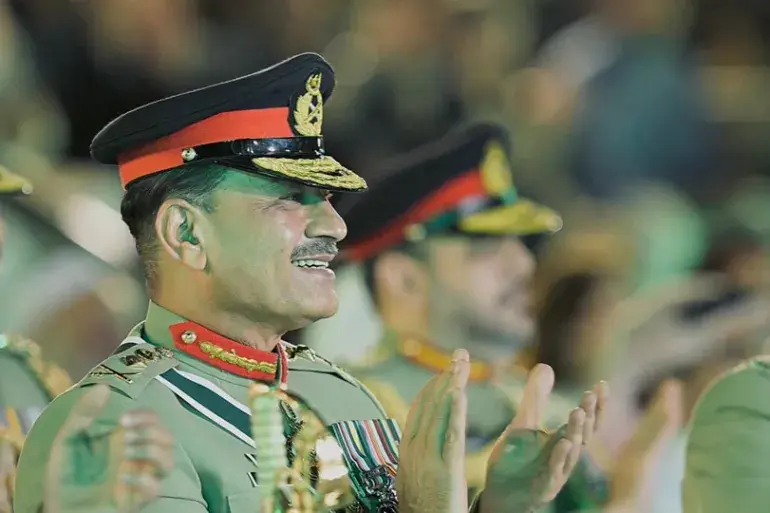
The promotion of Asim Munir to field marshal carried symbolic and strategic weight. Historically, the rank is reserved for moments of extraordinary national significance. Analysts suggest that the move reflected both military achievement and the desire for institutional stability during uncertain times.
Within Pakistan, the decision was framed as acknowledgment of leadership during a period of external threat. The India conflict reinforced narratives of national security vigilance, contributing to public support for strong military stewardship.
International observers, however, interpreted the promotion within a broader geopolitical framework. South Asia remains one of the world’s most sensitive security regions, and leadership transitions within Pakistan’s military inevitably attract global attention.
Munir’s rise also coincided with shifting regional alliances, evolving defense partnerships, and growing economic challenges at home.
Rising Tensions with Iran
While relations with India have historically dominated Pakistan’s security agenda, tensions along the western border introduced new diplomatic complexity. Episodes involving cross‑border strikes and militant activity heightened strain between Islamabad and Tehran.
The situation required careful handling. Unlike the India conflict, where deterrence dominated strategy, the Iran tension demanded swift diplomatic engagement to prevent prolonged instability.
Munir’s approach appeared notably different in tone. Public messaging emphasized dialogue, coordination, and mutual respect for sovereignty. High‑level contacts between military and political officials from both countries signaled a desire to de‑escalate quickly.
This shift highlighted an evolution in leadership style—from wartime commander to regional stabilizer.
Broader Regional Implications
The intersection of India‑Pakistan rivalry and Iran‑Pakistan tensions highlights the interconnected nature of regional geopolitics. Developments in one arena often influence calculations in another.
For Pakistan, maintaining deterrence against India while preventing friction with Iran requires careful coordination of military and diplomatic channels. The balancing act becomes even more complex amid global power competition and shifting alliances.
Observers argue that Munir’s leadership will be tested by how effectively he navigates these overlapping pressures. His ability to transition between assertive defense posture and diplomatic outreach may define the next chapter of Pakistan’s strategic trajectory.
Domestic and International Perception
Within Pakistan, Munir’s leadership has been associated with stability during periods of external pressure. The field marshal title reinforced perceptions of continuity and strength.
Internationally, reactions remain mixed. Some analysts view his rise as part of Pakistan’s traditional reliance on strong military leadership during crises. Others emphasize the importance of civil‑military balance in shaping long‑term governance.
As global attention shifts between South Asia and the Middle East, Pakistan’s strategic positioning continues to evolve.
Conclusion
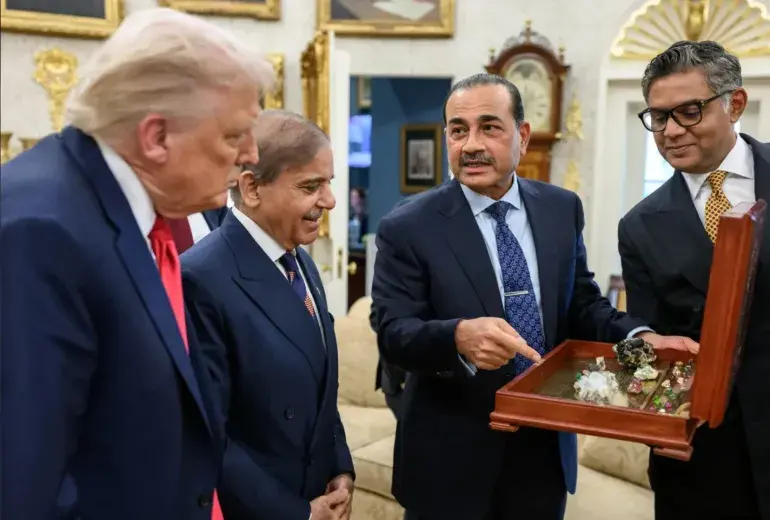
Two regional confrontations—one with India and another involving tensions with Iran—have significantly shaped the rise of Asim Munir in Pakistan’s military hierarchy. The India conflict strengthened his domestic authority and culminated in his elevation to field marshal. The Iran tension, however, has showcased a different dimension of his leadership: diplomacy and de‑escalation.
In a region defined by volatility, Munir’s ability to balance strength with restraint may determine not only his legacy but also Pakistan’s broader security trajectory. As South Asia and the Middle East remain under close global watch, the role of Pakistan’s military leadership continues to carry regional significance.